
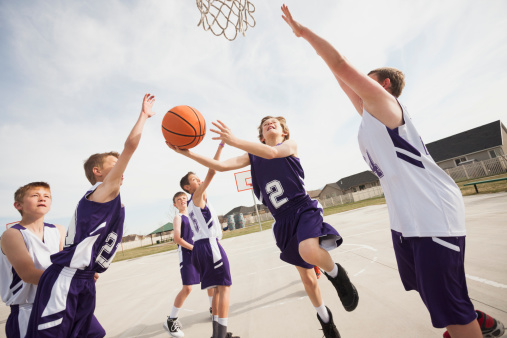
We want to prepare each athlete for long-term basketball success. For this goal to be reached, each kid must develop a solid foundation of the fundamentals while also applying them to practice environments and games. Every player, every stage.
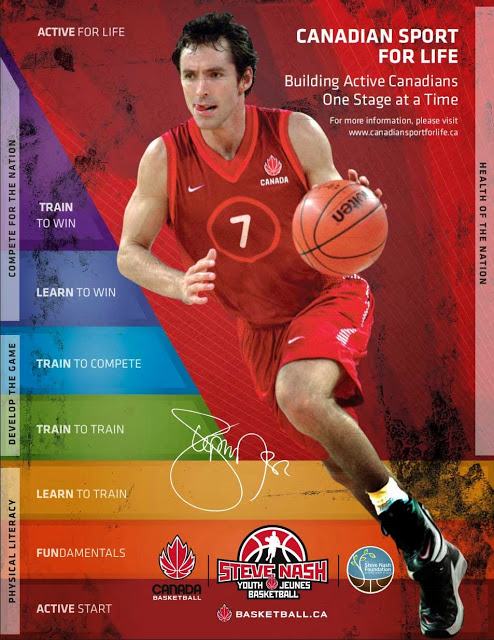
The 10 Stages of Skill Development:
- Shooting
Each TrueHoops’ athlete will be developed to shot consistently and accurately from the three point line, the foul line/mid range and will be able to finish around the rim. For players still finding their shot, Coach Mike has worked with several athletes, at the youth and HS level, on their jump shot using the Pro Shot System. The start of each TrueHoops practice is dedicated to improving each player’s shooting accuracy and consistency.
- Passing
This is a skill mostly determined by decision-making and basketball IQ. Although athletes will be taught various passing techniques, their vision and anticipation for the game will be developed through each drill in practice. (See Approach and Style)
- Defense
Coach Mike is pioneering a lockdown defensive movement on his YouTube channel. He has studied the techniques of great on-ball defenders and realized the fundamentals kids have been taught are incorrect. TrueHoops athletes will quickly be recognized for their on-ball defensive skills through the use of these new techniques.
- Dribbling
At TrueHoops we believe dribbling is a means to an end, not an end in itself. Like passing, dribbling will be developed through complex practice environments and specific teachings (see Approach and Style). Each player will be developed to use their dribbles to: create better passing angles, dribble penetrate or relieve pressure.
- Post Up
Yes, post play is dying across the basketball landscape, but the importance in learning it goes beyond actual post touches. The use of post ups at TrueHoops will emphasize the ability to create and initiate contact while being able to finish around the basket: an understanding of the high-low pass and low-high pass is important. There was also a recent study showing passes from the low-post to a three point shooter have a higher percentage of going in; so maybe post play will have a resurgence after all.
- Rebounding
There’s an old saying among coaches, “if you can shoot, defend, dribble or rebound, you will have a spot on any team.” Although TrueHoops understands the importance of rebounding, we are still trying to find the best ways to improve it. In my most recent coaching experience and observations, emphasizing rebounding in every scrimmage and drill has a greater improvement on rebounding then actual rebounding drills. This concept still needs more research, but has been successful and ties into our Approach and Style.
- Cutting
Getting open is an art form. It requires proper footwork and situational recognition. This is an aspect rarely covered by youth coaches, but is an aspect carefully taught by the best coaches. How to make an L cut, a V cut, a banana cut, zipper cut, seal cut, and the list goes on and on, but footwork and recognition is the most important. TrueHoops teaches players how to read their defenders, find openings in the defense and use the correct footwork to get open.
- Off Ball Screens
There is a negative trend of players improperly using off-ball screens. Players are being conditioned, at a young age, to use off-ball screens to reach a specific point in a set-play. Instead of reading their defenders and making the right basketball move, they are blindly following the coach’s diagram. At TrueHoops we develop basketball IQ: we teach kids how to initiate an off-ball screen and how to correct read the defense. We want players to make plays, not follow one.
- Pick and Roll
How could any sane coach list Pick and Rolls last? They are dominating every level of the game. On the other hand, an observation was made my Mike MacKay, Canada’s Youth Basketball Director, noting how pick and rolls are inhibiting the growth of skill acquisition. Younger players are becoming reliant on the pick and roll for a means of relieving pressure and dribble penetration. Therefore, TrueHoops does not teach the pick and roll until every player is able to dribble penetrate without it and is able to read the defense off ball. Thus the pick and roll at TrueHoops is devastating when introduced instead of an excuse for offense.
- Set Plays
TrueHoops players are taught to make plays, not follow one. Thus, when set plays are introduced, a steady foundation of fundamentals has already been established. The set plays taught are effective while offering room for improvisation. When a TrueHoops team reaches stage 10, they will learn a system of offensive movements triggered by player’s reads and passes. So you will not see a TrueHoops Coach screaming out a set play every time down the floor. We are developing basketball IQ, not robots.
Basketball IQ and decision making is a core fundamental applied to each drill in practice and film study at TrueHoops. Coordination, strength and conditioning are applied to the dynamic warm-up before every practice.
…
The Sins of Youth Basketball
- Full-court trapping zone defenses
- Half-court zone defense
- Isolation plays
If you want to win youth basketball games do the three things above. These are unfair constraints placed on undeveloped athletes. They are applied by coaches who value winning over development.
Full-court trapping zone defenses are designed to only give up the cross-court skip pass; a pass unattainable by most young athletes due to strength. I have seen many youth players make the correct read and attempt these passes only to be undermined by their physical limitations. At the high school level and beyond these defenses are easily exploited by average players and average coaches. So what are we developing when this tactic is applied at the youth level?
Half-court zone defense are designed to prevent dribble penetration and force outside shots. Unfortunately most young athletes struggle most with consistent shooting; a result of lack of reps, due to young age, and physical growth. More destructive however, is the compensation of half-court zone defenses for poor man-to-man defensive teams. Teams who utilize zones are covering up a lack of proper defensive principles. Thus youth players developed in zone teams become vastly unprepared for the speed and anticipation needed at the High School defensive level. So what are we developing when this tactic is applied at the youth level?
Isolation plays put the ball in the best player’s hands and tell everyone else to get out of the way. I think it is clear how this tactic is detrimental to player development: one player is developed while everyone else is excluded. Although an efficient play call at the youth level, it develops nothing more than 1 v 1. So what are we developing when this tactic is applied at the youth level?
…
TrueHoops prepares each athlete for long-term basketball success. We teach fundamentals. We teach skills. We teach basketball. Because at TrueHoops, it’s about more than the game.
 truehoopsaau.com